
Health article
Herniated disc vs. bulging disc: what is the difference?
By Pamer Chiropractic Health Center, Akron, Ohio
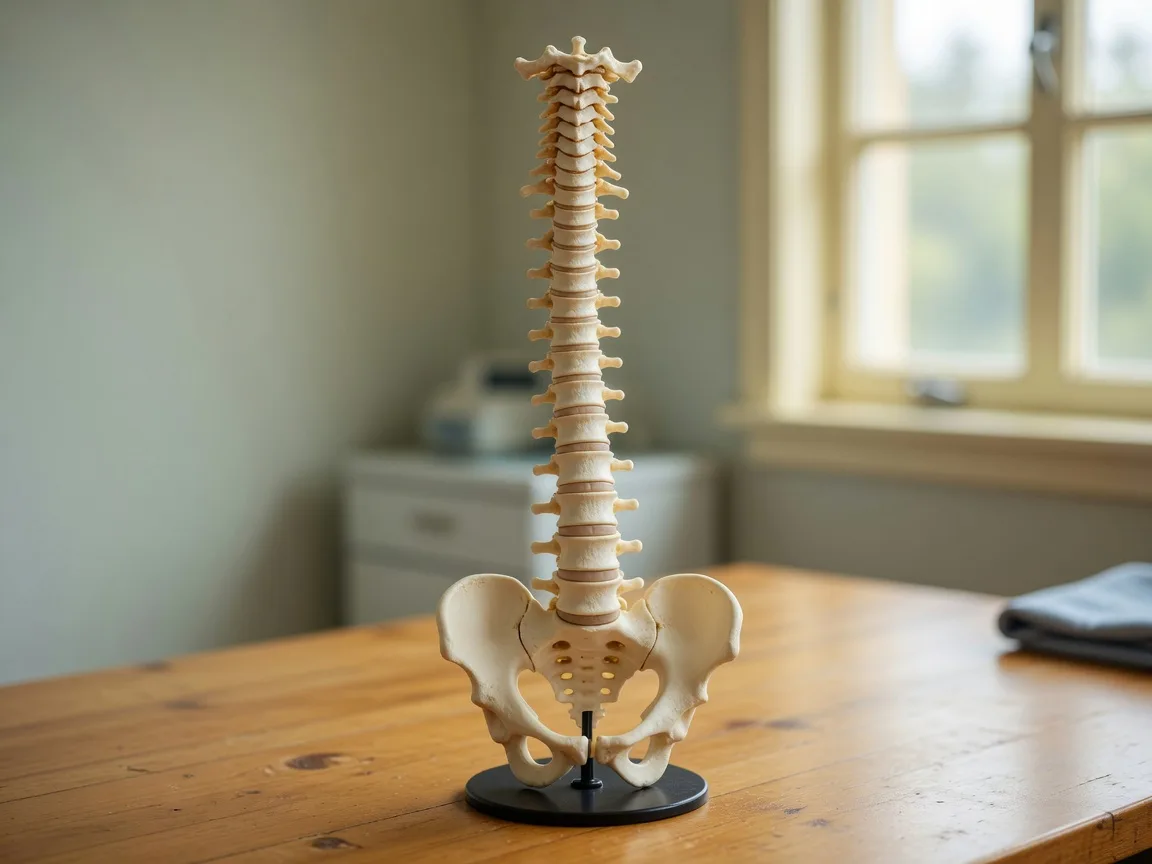
A bulging disc extends beyond its normal space with the outer ring still intact, while a herniated disc has a tear in the outer ring that lets inner material push out. Both can press on nerves and cause pain, numbness, or weakness, and both are often managed conservatively. The labels matter less than your exam and imaging, and at Pamer Chiropractic Health Center in Akron the plan is built on those. Patients from Green, North Canton, Uniontown, Cuyahoga Falls, Barberton and other communities across Summit, Stark and Medina counties are welcome at the Akron office.
What exactly is a bulging disc?
Spinal discs are small cushions between the vertebrae, made of a tough outer ring around a soft center. A bulging disc is one whose outer ring has stretched and pushed outward beyond the space between the bones, like a balloon that keeps its shape.
Bulges are common with age and often cause no symptoms at all. Many are found incidentally on imaging done for other reasons, which is why findings alone never tell the full story.
What is a herniated disc?
A herniated disc happens when the outer ring tears and the soft center pushes through, sometimes touching a nearby nerve. That is when the classic symptoms appear: pain that travels down a leg or arm, numbness, tingling, or weakness.
Herniations range from small to large, and the size does not always match the symptoms. A small herniation in a tight space can cause significant pain, while a larger one may not.
How are symptoms different?
In practice, symptoms from bulges and herniations overlap a lot. Both can cause local back or neck pain, and both can irritate a nerve root and send pain down the leg or arm. The distinction is mainly structural, not symptomatic.
The features that matter most in the exam are where the pain travels, how long it has been present, and whether numbness or weakness is progressing.
How are they treated?
Most disc problems, bulged or herniated, improve with time and conservative care: education, activity modification, and treatments like chiropractic care, decompression, and laser therapy where they fit. Surgery is reserved for specific situations, usually after conservative options have been tried or when emergency signs are present.
At the clinic, LaserDisc Non-Surgical Spinal Decompression is the signature option for disc-related pain, paired with chiropractic care and laser therapy depending on the exam.
What should you do next?
If your symptoms are mild and recent, sensible self-care for a couple of weeks is reasonable: stay gently active, avoid heavy lifting, and take movement breaks. If pain interferes with daily life, radiates to a limb, or is not improving, an evaluation makes sense.
Emergency symptoms are non-negotiable: loss of bladder or bowel control, groin numbness, or sudden leg weakness mean emergency care immediately.
What this means for you
Whether a disc is bulging or herniated tells you less than how your symptoms behave. A careful exam, your history, and imaging when needed do the real sorting, and conservative care helps most people.
When to see a chiropractor or doctor
See a chiropractor when disc-related pain is not settling or is affecting daily life. Call 911 for loss of bladder or bowel control, numbness in the groin or saddle area, sudden leg weakness, or severe pain after a fall or crash.
Sources
Common questions
Is a herniated disc worse than a bulging disc?
Not necessarily. Herniation means the outer ring has torn, but symptoms depend on location, size, and what the disc touches, not just the label.
Can a bulging disc heal on its own?
Many disc-related symptoms improve with time and conservative care. Outcomes vary, and no specific result can be promised.
Do I need surgery?
Most disc problems do not require surgery. It is considered in specific situations, usually after conservative care has been tried or when emergency signs appear.
How is laser decompression different from other care?
LaserDisc pairs computer-controlled decompression with Class IV laser therapy in one program. Candidacy is decided by the exam, and it is one of several options at the clinic.
When should I go to the emergency room?
Immediately for loss of bladder or bowel control, groin or saddle numbness, sudden leg weakness, or severe pain after a major fall or crash.
Last updated October 2026